
RAG (Retrieval-Augmented Generation) is a powerful AI technique that enhances language models by combining their general knowledge with specific, up-to-date information from external sources. Instead of relying solely on pre-trained data, RAG systems can access and incorporate relevant information from databases, documents, or knowledge bases to provide more accurate and contextual responses.
Understanding RAG Technology
Traditional AI models like GPT or Claude have extensive world knowledge but lack specific information about your business, users, or niche domains. RAG bridges this gap by creating a system that can retrieve relevant information from your custom knowledge base and feed it to the AI model before generating a response.
The RAG process involves three key steps: first, your documents or data are converted into numerical representations called embeddings and stored in a vector database. When a user asks a question, the system searches for semantically similar content in your knowledge base. Finally, this retrieved information is combined with the user's query and sent to the AI model for generating a comprehensive response.
Implementing RAG in Bubble.io Applications
Building RAG systems in no code applications like Bubble.io requires connecting to external services that handle the complex embedding and retrieval processes. You'll need to integrate with vector databases and AI APIs using Bubble's API Connector plugin.
The implementation typically involves creating workflows that first save new knowledge to your vector database, then query that database when users ask questions. The retrieved information is then combined with the user's query and sent to an AI service like OpenAI or Claude for generating the final response.
Available RAG Services for No Code Development
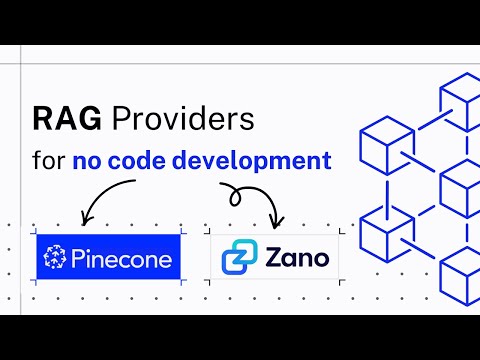
Several services make RAG accessible to no code developers. Xano has emerged as a reliable choice, offering vector storage as a data type within their database platform. This makes it particularly suitable for Bubble.io developers who need fast database operations and vector capabilities in one solution.
Pinecone remains a comprehensive vector database solution with extensive features including search, recommendations, and agents. However, it can be more technical to implement compared to simpler alternatives.
OpenAI's File Search feature provides a quick start option if you're working with PDFs and documents. You can upload files directly to OpenAI's platform and let them handle the chunking, embedding, and retrieval processes.
For developers needing structured data handling, Cloudflare's AutoRAG service is expanding to support database integration, though it currently focuses primarily on file-based knowledge bases.
Practical Use Cases for RAG in No Code Apps
RAG systems excel in applications requiring domain-specific knowledge. Customer support chatbots can access company documentation to provide accurate answers about products and policies. Educational platforms can create AI tutors that draw from course materials and textbooks to answer student questions.
Professional services apps can build systems that query client data or industry-specific information. For example, a therapy app could store user session notes and provide contextual insights, while maintaining privacy through proper data isolation.
Content creation tools can leverage RAG to generate materials based on brand guidelines, previous content, or research databases. This ensures consistency and accuracy in AI-generated content.
Benefits and Considerations
RAG systems provide several key advantages over standard AI implementations. They deliver more accurate responses by incorporating current, relevant information rather than relying on potentially outdated training data. This is particularly valuable for businesses with evolving products, services, or policies.
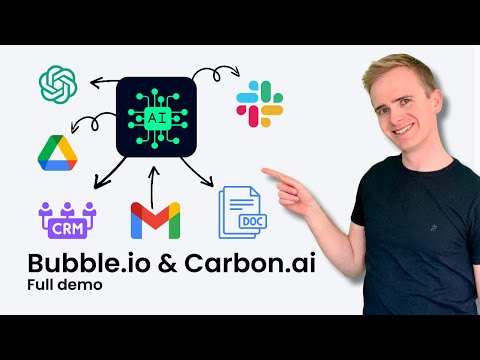
However, implementing RAG in no code applications requires careful consideration of service reliability. The shutdown of Carbon.ai in early 2025 highlighted the risks of depending on third-party services that may be acquired or discontinued.
When choosing RAG providers for your Bubble.io application, prioritize established platforms with strong track records. Consider building with services that give you more control over your data and reduce dependency on external providers that might disappear.